Name Change Gazette Documents: A Preparation Checklist
Use this practical checklist to organize identity records and supporting papers before seeking Name Change Gazette assistance.
Preparing documents is often the part of a Name Change Gazette enquiry that feels most confusing. The aim is not to collect every paper you have. It is to organize the records that help explain your current identity, your proposed name, and the reason for the change under the process that applies to you.
This checklist is general guidance for planning purposes. Authorities, publishers, and institutions can set their own requirements, and those requirements may change. Review the instructions that apply to your situation before submission.
Begin with your current identity record
Start with the photo identity document you rely on most often. Read it carefully and copy the name exactly as it appears, including initials, middle names, spacing, and surname. This is the reference point you can use while checking the rest of your paperwork.
You may also be asked to provide an address record or another document that supports your present details. Keep the copies legible and complete. A cropped image, unclear scan, or expired record can cause delays in reviewing what you have provided.
Add records that support your reason for changing your name
The supporting document depends on your reason. For example, a person changing a name after marriage may have a marriage record. Someone correcting a long-standing spelling mismatch may need records that demonstrate the variation. In other cases, the relevant procedure may call for a declaration or affidavit.
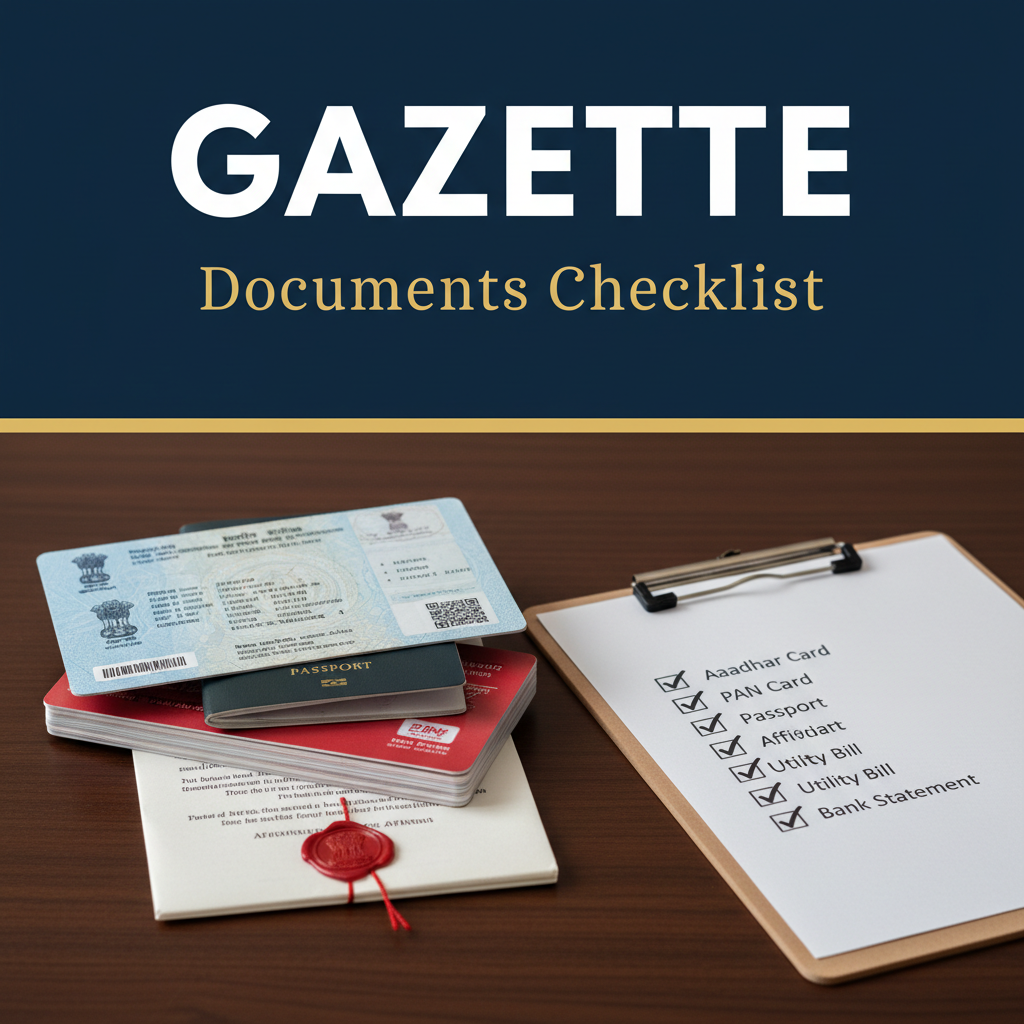
Common categories to consider include:
- current identity and address records;
- a marriage, divorce, adoption, or other relevant civil record where applicable;
- birth or educational records if they help explain an existing name variation;
- a declaration or affidavit when required by the applicable process; and
- photographs or signed forms only where specifically requested.
Do not treat this list as a promise that each item will be accepted or required. It is a way to begin organizing your files before you ask for situation-specific guidance.
Check name consistency across every page
A document set is easier to review when the names are consistent. Compare your current name, proposed name, date of birth, and address across each record. If a detail differs, do not silently ignore it. Write down what is different and where it appears.
Common examples include a missing middle name, a surname written in a different order, an old address, or a spelling variation. Some differences are straightforward to explain; others may need additional supporting material. Identifying them early helps you ask the right question instead of discovering a problem after submission.
Make clean, readable copies
A good scan or photograph should show the entire document, including edges where relevant. Use adequate lighting and avoid reflections, fingers covering text, or heavy compression that makes print difficult to read. If a document has information on both sides, retain both sides.
Name files clearly so you can find them again. A simple approach is to use labels such as current-id, address-proof, marriage-record, or supporting-record. Avoid putting sensitive information in file names when you share them through insecure channels.
Keep originals secure
Original documents are valuable and should stay with you unless a specific authority or institution requires otherwise. If an organization asks for originals, confirm its process and keep a record of when and how they were provided. For routine preparation support, legible copies are often the starting point.
Store digital copies in a secure location that you control. Consider a password-protected folder or another private method, and remove copies from shared devices when appropriate. Never send passwords, PINs, banking credentials, or unrelated private information as part of a name-change enquiry.
Prepare a short document summary
Alongside your files, write a short summary for yourself. Include your current name, proposed name, reason for the change, location or state, and the records you have ready. This makes it easier to describe your case accurately without repeatedly searching through documents.
A summary can also help a private assistance service explain what it can and cannot support. A responsible service should set clear expectations, use cautious language about authority decisions, and provide privacy information before requesting sensitive records.
Know what happens after preparation
Organizing documents is only one part of the journey. A Gazette-related step does not automatically update all identity and institutional records. Each organization may request its own forms, supporting materials, and review. Plan enough time to check requirements for banks, employers, educational bodies, travel-document authorities, and other record holders relevant to you.
Keep a copy of completed paperwork and any acknowledgement you receive. A simple folder, digital or physical, can make later updates much easier.
Use the checklist as a starting point
The best next step is to gather your core records, note any name differences, and seek guidance before you submit documents that are incomplete or inconsistent. This reduces guesswork and helps you protect your personal information.
BookMyGazette.com offers independent private assistance for Name Change Gazette documentation and application support. It is not a government department, government-affiliated portal, or official record service, and it does not promise publication or institutional-update outcomes. You can request private guidance through the Apply Online page.
Explore Topics
Written by
BookMyGazette.com Editorial Team
Content creator and writer sharing insights and stories.